Borrowed Calm
Borrowed Calm — a political strategy game (early playtest build)
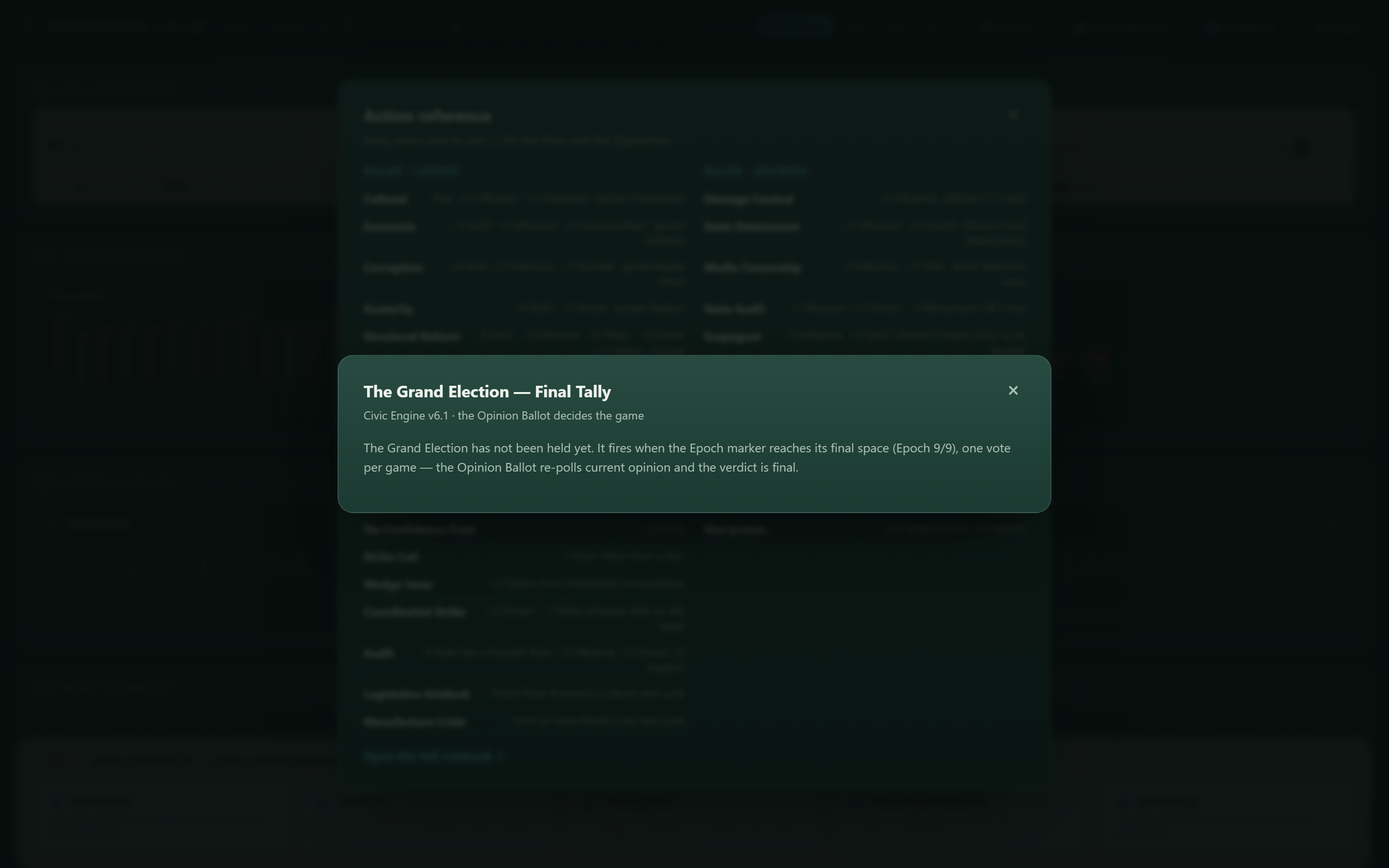
You govern from a plain administrative console. No spin. No music swelling under your decisions. Just three restless voter blocs, a ledger of consequences, and a clock counting down to the vote.
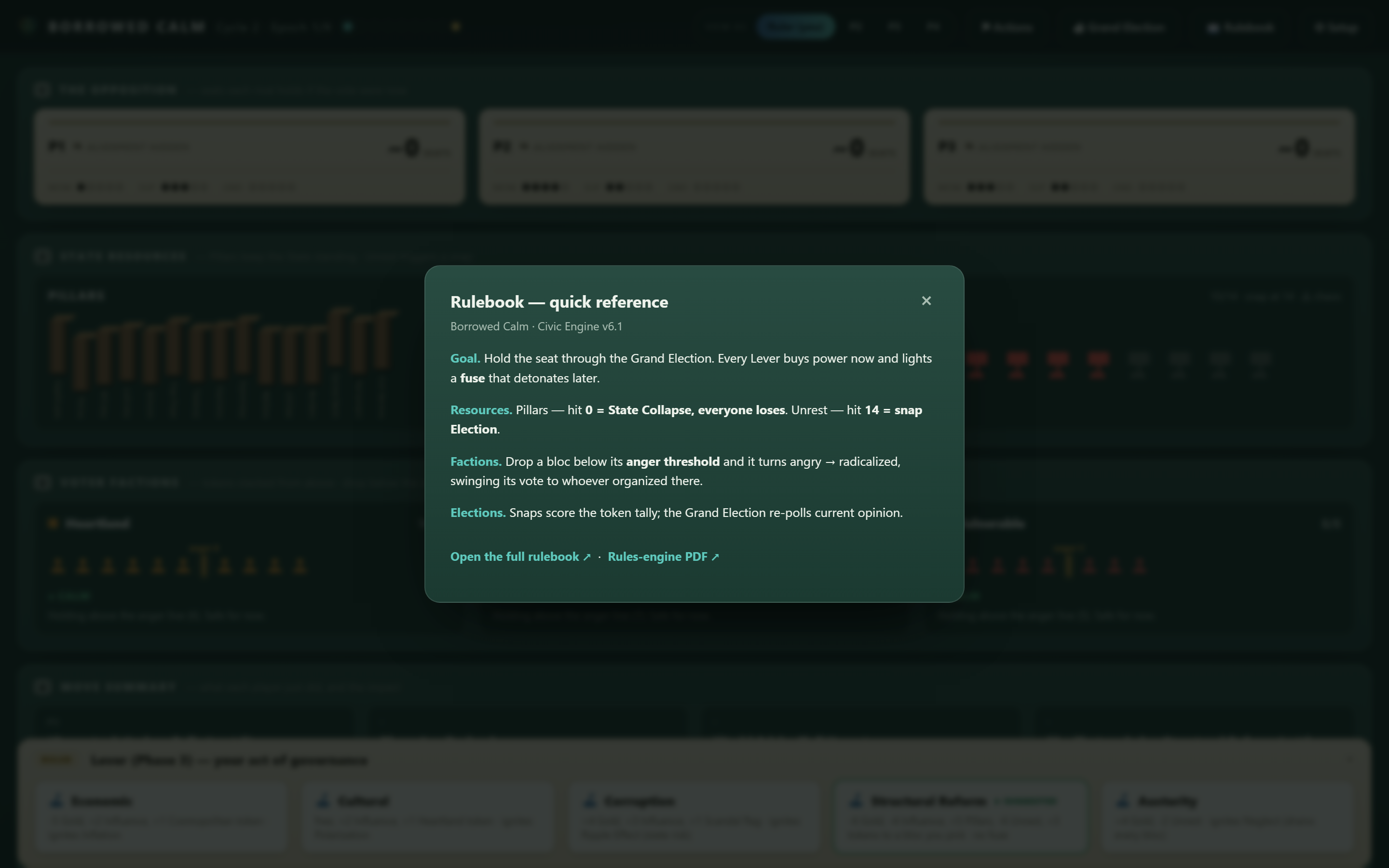
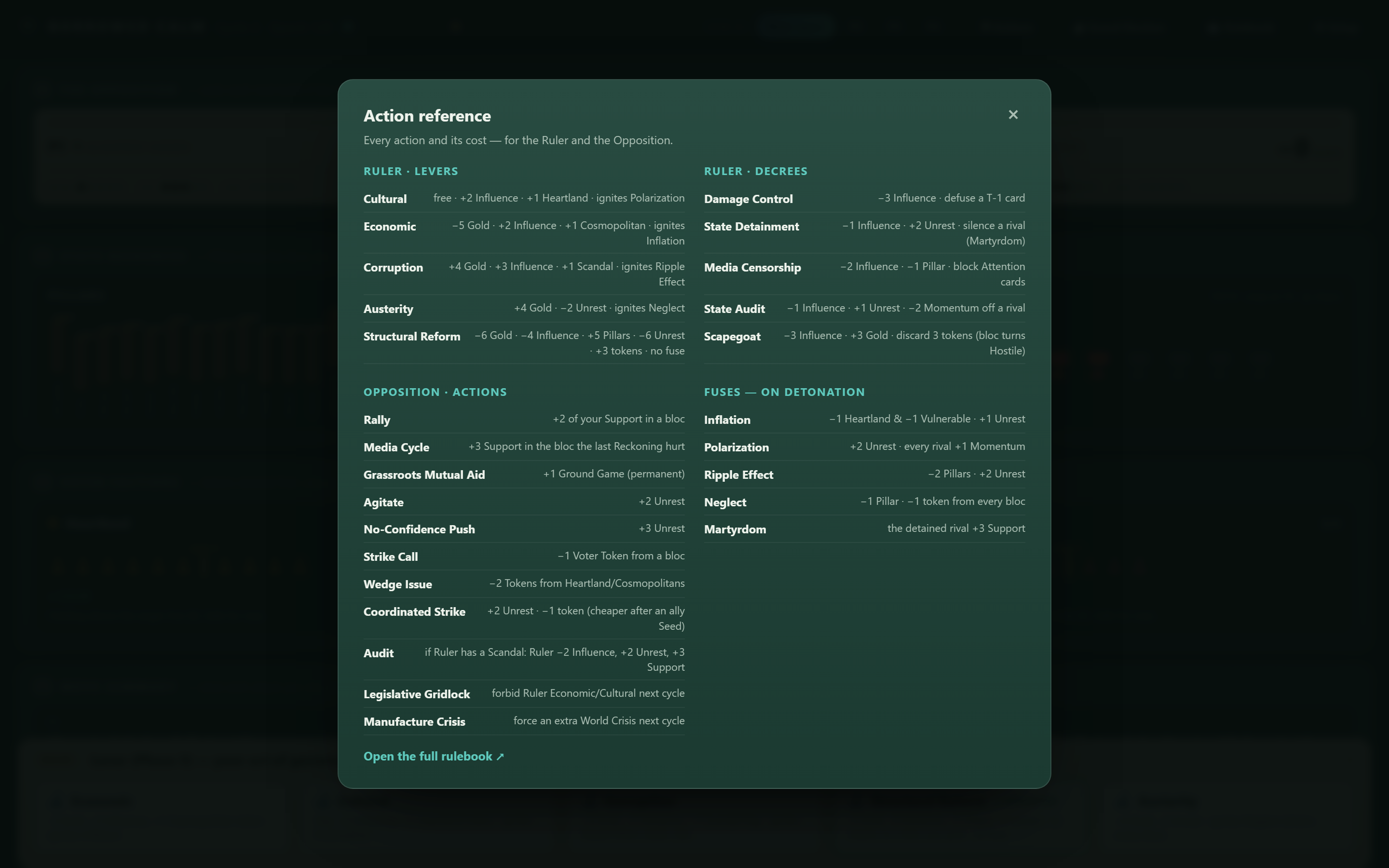
You rule a small, fragile state. You have real tools — money, laws, the power to act now — and every one of them buys you calm today and quietly charges the cost to a later turn the whole country can see coming. Every policy lights a fuse in plain sight. Every promise is stability you borrowed against tomorrow.
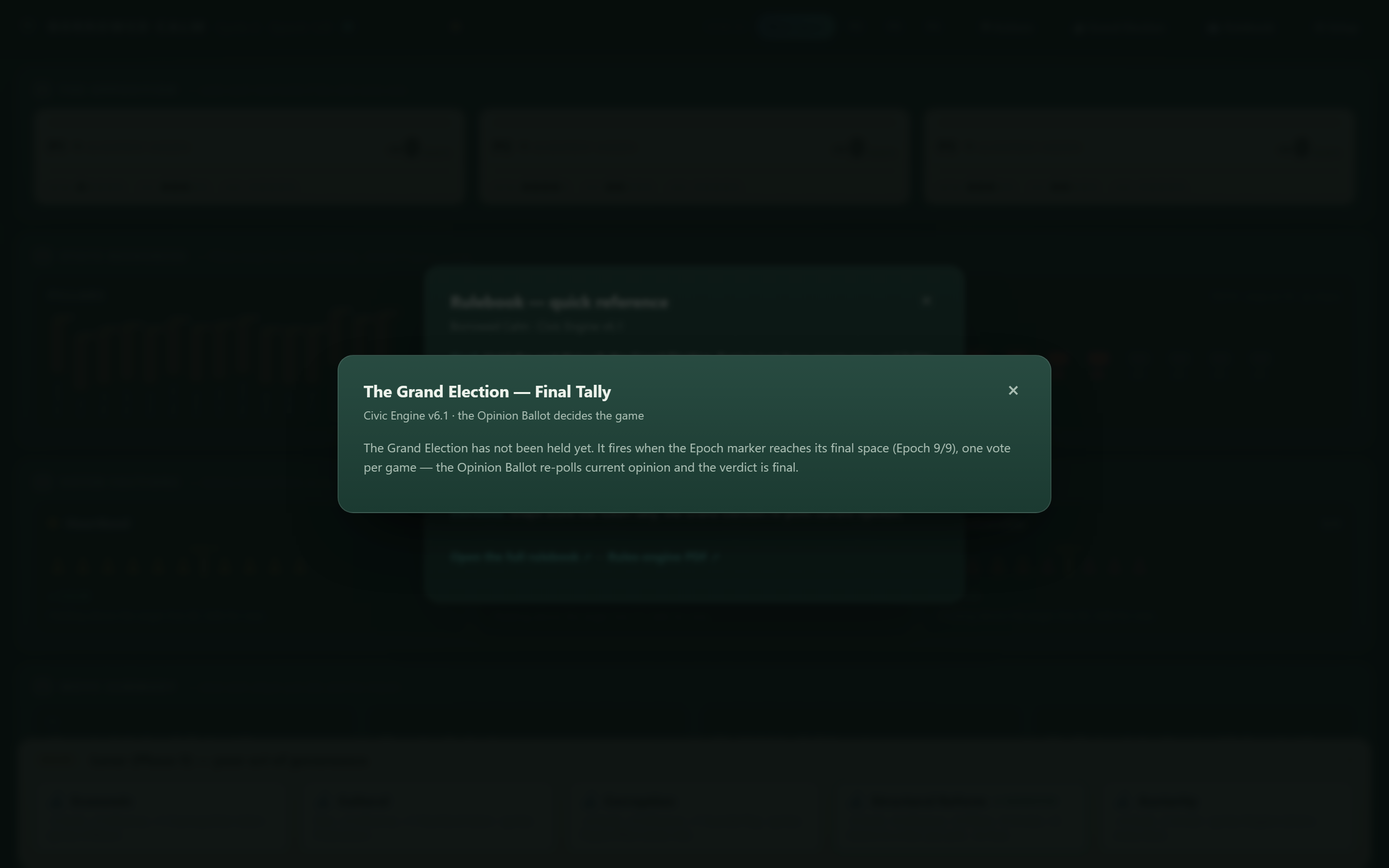
Then the Epoch ends, the room re-polls its real opinion of you, and history ends the way it always does — with a vote.
Why it looks like a government terminal
This is on purpose.
Borrowed Calm isn't dressed up because the job it simulates isn't. Real governing happens in briefings and budget lines, not cutscenes. The interface is a stark administrative console — numbers, ledgers, and consequences you can't look away from — because that's the honest face of power. Nothing is hidden. Nothing is free. The reckonings just approach, in plain text, at a pace you chose.
If you want juice and particle effects, this isn't that. If you want a game where a single cold number — Unrest crossing a bloc's anger line — makes your stomach drop, sit down at the console.
What you actually do
- Fund the state, buy influence, suppress dissent — every move works, and every one bills you later.
- Read three voter blocs — the Heartland, the Cosmopolitans, the Vulnerable. They aren't resources. They have tempers and breaking points, they remember how you treated them, and at the end they vote.
- Watch the clock you can't stop. The Epoch is fixed and visible. When it runs out, your intent counts for nothing — only the state you leave behind.
- Don't hit the wall. If the country's Pillars ever reach zero, everyone loses. That's the end of the borrowing road.
No dice. No hidden bookkeeping. Free to play in your browser.
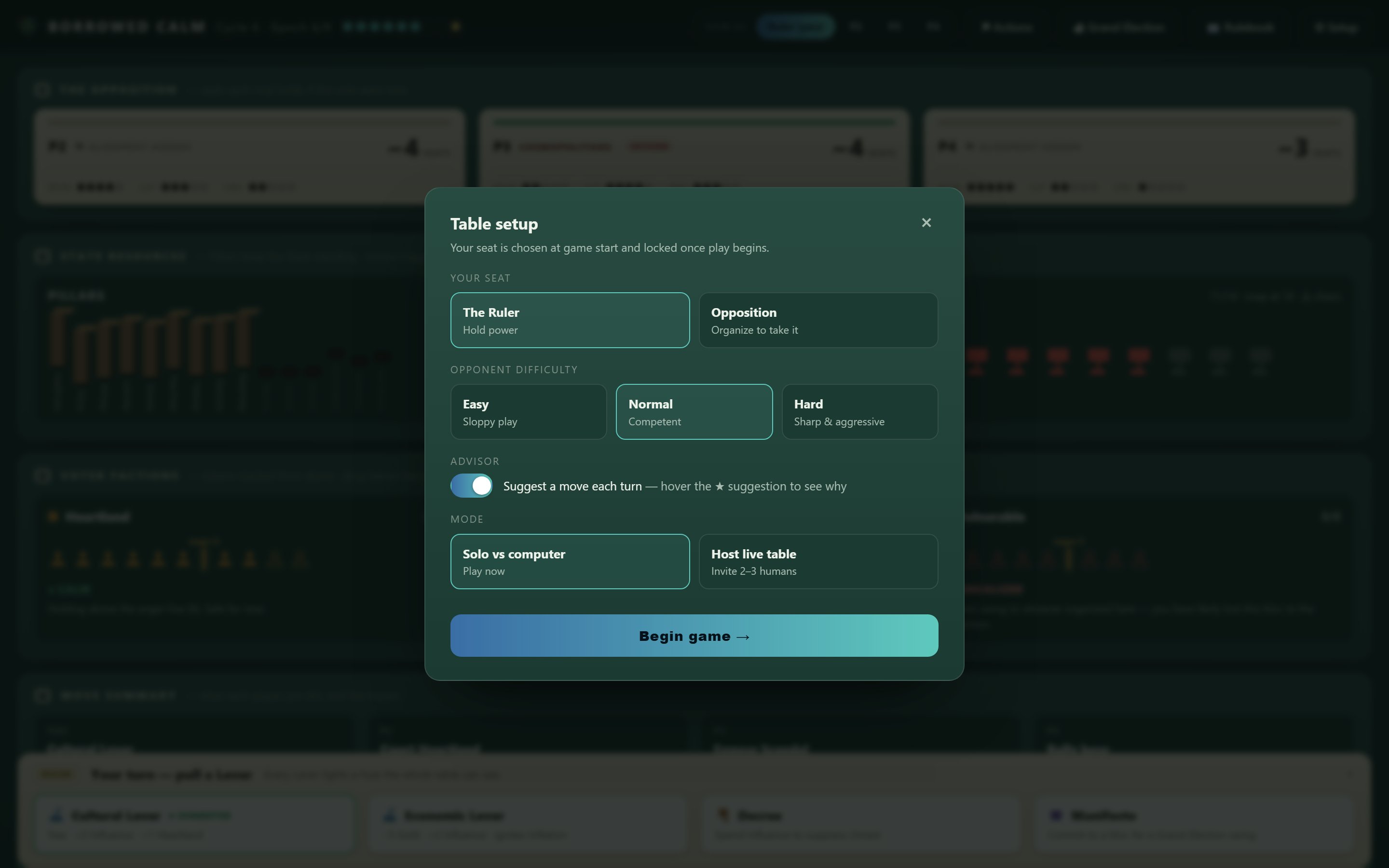
Players: 1 Ruler vs. 2–3 Opposition · Ages 14+
Development log
- basis/explanation of game design4 days ago